Low-Phosphorus Dog Food for Early Stage Kidney Disease
My dog, Nicol, was diagnosed with early stage kidney disease in April 2024. She was 14 years old. I was devastated.
There were no obvious signs. She had been drinking slightly more water, but there were no accidents in the house, she was still active for her age, and her appetite was healthy. It was during a routine annual blood test that her results revealed early stage kidney disease, with elevated serum phosphorus, creatinine, and SDMA.
Right from the start, I knew we had to control her phosphorus levels. At this early stage, it can still be managed with a low-phosphorus diet. She was also losing muscle mass — mild muscle loss on the MCS score — so going low protein was not recommended.
Protein vs. Phosphorus: What the Latest Evidence Says
The latest evidence suggests that phosphorus restriction plays a larger role in preserving kidney function and extending survival, while severe protein restriction risks loss of lean body mass and quality of life. Today, many veterinarians agree that a low-protein diet is not necessarily the best nutrition plan for early stage kidney disease. High-quality, highly digestible protein is preferred over simply minimizing total protein intake.
That said, if the disease progresses and signs of uremia are observed, protein restriction becomes necessary. Uremic symptoms are signs of advanced kidney failure caused by a buildup of toxins in the blood when the kidneys can no longer filter effectively. Reducing protein intake decreases the production of nitrogenous waste products, helping to manage symptoms like nausea, vomiting, loss of appetite, bad breath, mouth ulcers, and weakness.
Phosphorus, on the other hand, must be carefully controlled even at the earliest stage.
All dogs with CKD should be closely monitored with regular vet visits. The moment Nicol was diagnosed, we worked closely with her vet and scheduled follow-up health checks every four to six months.
The Role of Phosphorus Restriction
Studies have shown that lowering dietary phosphorus is directly associated with a longer period of stable kidney function and improved clinical outcomes. Limiting phosphorus intake helps maintain a stable glomerular filtration rate (GFR) and prolongs survival in dogs with CKD.
Elevated phosphorus leads to hyperparathyroidism and renal damage, accelerating disease progression. This is why prescription renal diets for dogs often focus on phosphorus reduction as a central feature.
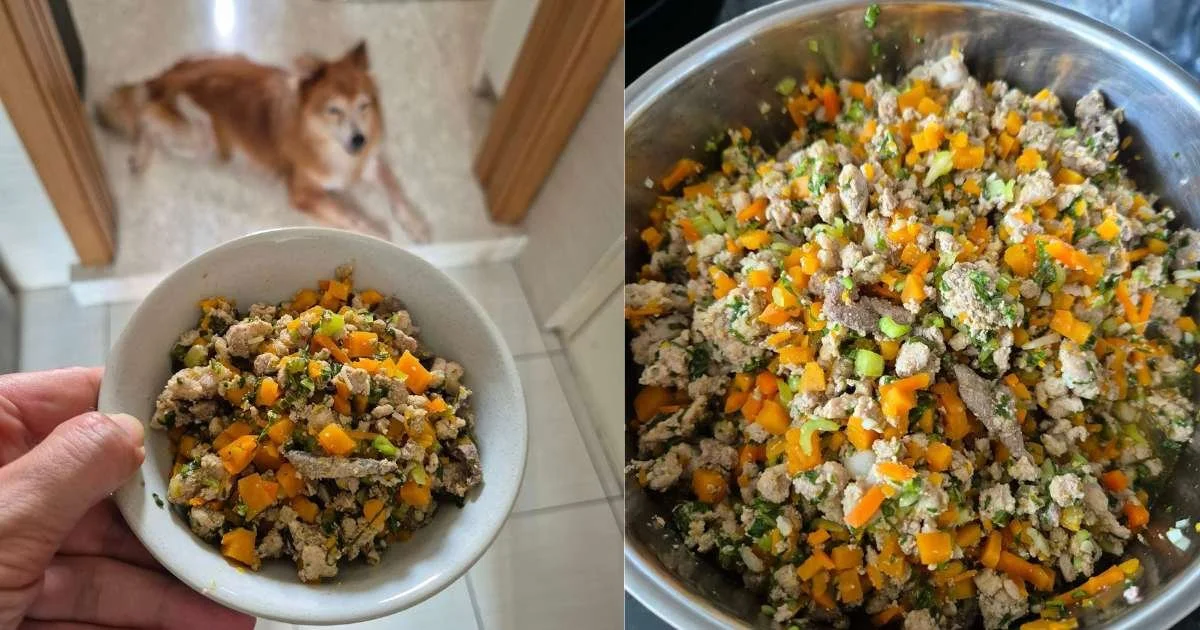
Low phosphorus, fresh cooked dog food for chronic kidney disease
Why I Chose to Home Cook Nicol's Renal Diet
The prescription renal diet recommended to us was a dry kibble. As a pet nutritionist, I wasn't comfortable with that. Moisture is critically important for dogs with kidney disease. Adequate hydration helps flush toxins from the body, and dogs with CKD are prone to dehydration, which can worsen kidney function and accelerate disease progression.
On top of that, Nicol simply wouldn't eat the prescription diet. She had always been on a fresh, cooked diet and wasn't about to change her mind. Since her usual commercial fresh food was no longer suitable for her condition, I decided to formulate a low-phosphorus diet myself.
The recipe needed to be complete and balanced according to AAFCO nutrition guidelines, lower in phosphorus (around 0.6%), and have a therapeutic omega-6 to omega-3 ratio of no more than 3:1. The omega ratio matters. It helps ensure the overall diet remains non-inflammatory.
Kidney patients, both human and animal, tend to experience chronic low-grade inflammation due to a combination of factors: accumulation of toxins, oxidative stress, and impaired immune response. This inflammation is linked to complications such as cardiovascular disease, muscle atrophy, and other serious conditions.
At this stage, a phosphorus content of 0.6% is acceptable. However, should the disease advance, it should be lowered to no more than 0.5%.
The Low-Phosphorus Dog Food Recipe
⚠️ Important: This recipe is suitable only for adult and senior dogs with early stage kidney disease (Stage 1–2), no signs of uremia, and no history of recurring pancreatitis. This is a beef recipe, a modified version of Nicol’s food. Nicol had several recipes, using different proteins for rotation. If your dog is allergic or sensitive to beef or any of the ingredients listed, OR in a more advanced stage of the disease, OR managing multiple diseased conditions, please do not use it. If you need assistance, you are welcome to reach out to me here.
Recipe and macronutrient analysis below.
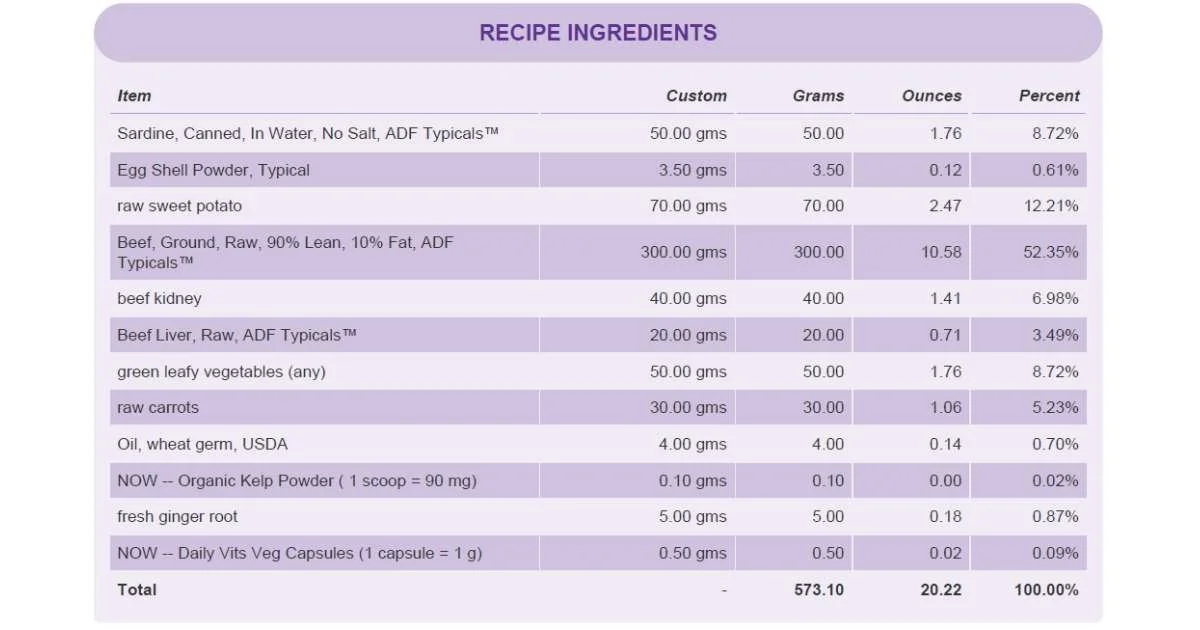
Low phosphorus dog food recipe for canine chronic kidney disease
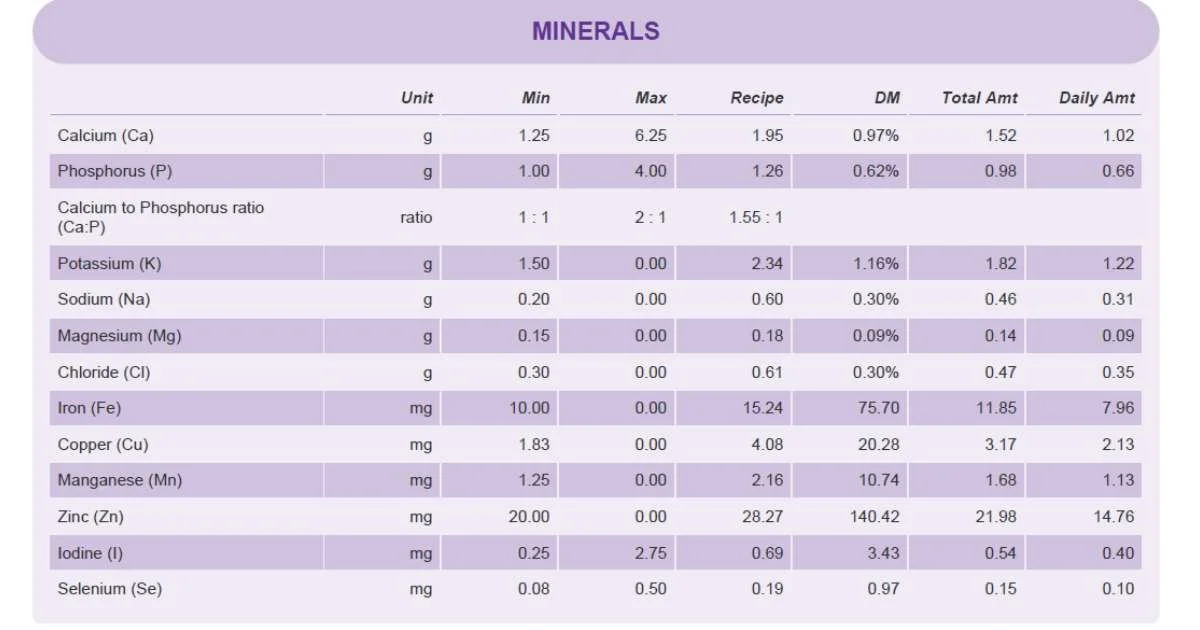
Nutrient analysis of canine chronic kidney disease recipe (beef)
I formulated several recipes using different proteins and vegetables to allow for diet rotation. Regularly rotating proteins means your dog's immune system isn't constantly exposed to the same ingredients, which helps prevent it from becoming over-sensitive and triggering an allergic reaction. Rotation also provides a wider range of nutrients, different proteins and food types offer varying levels of vitamins, minerals, and amino acids, leading to a more complete nutritional profile over time.
With these recipes, we managed to lower Nicol's serum phosphorus level from 5.5 mg/dL to 4.6 mg/dL, and kept it consistently at that level.
At the time of writing, Nicol is no longer with us but these lower phosphorus diet helped her. Please understand, that adjustments may be necessary depending on your dog's individual condition. Do not assume this recipe will be suitable for every dog with CKD. Work closely with your vet, and know that nutrition plays a huge role in managing kidney disease in dogs.