Why the Omega-6 to Omega-3 Ratio Matters for Your Dog or Cat
If you've ever looked closely at the ingredient list on your pet's food, you may have noticed terms like fish oil, flaxseed oil, or sunflower oil. These aren't just fillers. They're sources of fatty acids that play a significant role in your pet's health. Here, we are going to discuss two types of fatty acids - omega-6 and omega-3 - particularly when it comes to managing inflammation.
For pets living with chronic conditions, the balance between omega-6 and omega-3 fatty acids in the diet can make a meaningful difference.
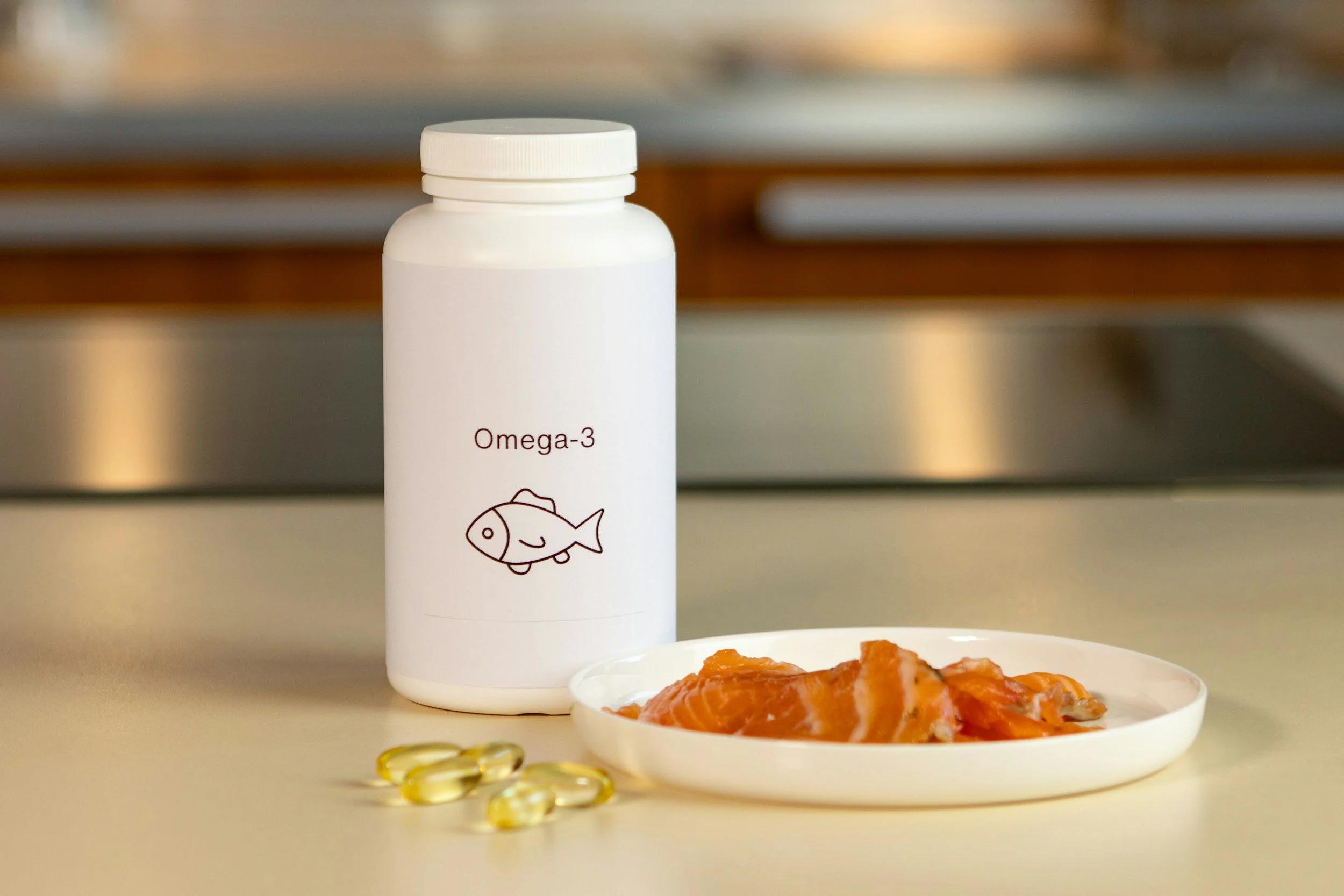
Salmon and omega-3 supplement
Essential Fatty Acids for Dogs and Cats
Omega-6 and omega-3 fatty acids are both essential polyunsaturated fats. "Essential" means the body cannot produce them on its own. These fatty acids must come from the diet.
In dogs and cats, the key omega-6 fatty acids are linoleic acid (LA) and arachidonic acid (AA). Linoleic acid is found abundant in vegetable oils, nuts, and seeds, while arachidonic acid (AA) is derived from animal products like meat, eggs, and seafood or synthesized from LA in the dog’s body. Unfortunately, cats are unable to synthesize AA from LA due to the lack of delta-6 desaturase enzyme. As such, LA is essential for both dogs and cats, whereas AA is essential only for cats.
The key omega-3 fatty acids for dogs and cats are alpha-linolenic acid (ALA), eicosapentaenoic acid (EPA), and docosahexaenoic acid (DHA). Sources of ALA includes seeds and nuts like chia seeds, flaxseeds, hemp seeds, and walnuts. Plant-based oils like canola oil and soybean oil are good sources of ALA too. You can also get ALA from vegetables like brussels sprouts, spinach, and leafy greens.
Sources of EPA & DHA are fatty fish like salmon, mackerel, sardines, anchovies, tuna, and herring. Fish oil and liver oil supplements like cod liver oil, salmon oil, and sardine oil are great dietary sources of EPA and DHA too, especially if your pet is not fond of eating fish. Other sources are krill oil, calamari/squid oil, and green-shelled mussel oil.
Though not relevant to dogs and cats, for humans, vegetarian sources of EPA and DHA includes algae & seaweeds like wakame, kombu, and nori.
Understanding the Omega-6 : Omega-3 Ratio for Health
While omega-3 fatty acids are widely recognized for their anti-inflammatory properties, omega-6 fatty acids exhibit both pro- and anti-inflammatory effects, highlighting the importance of achieving a balanced intake. The ideal omega-6:omega-3 ratio for dogs and cats, is between 5:1 and 1:1. The therapeutic ratio for dogs and cats with inflammatory skin condition, arthritis and other chronic inflammatory conditions is between 3:1 and 1:1.
In other words, the ratio of omega-6 to omega-3 in the diet directly shapes the inflammatory environment of your pet's body.
The Problem with Modern Pet Diets
The widespread use of vegetable oils, particularly corn, sunflower, and soybean oil in commercial pet food has contributed to diets that are significantly higher in omega-6 fatty acids than omega-3. These oils are rich in LA, an omega-6 fat, but contain little to no EPA or DHA. As a result, many pets today are consuming diets with an omega-6 to omega-3 ratio that is far higher than what research suggests is optimal.
The Association of American Feed Control Officials (AAFCO) sets a maximum recommended omega-6 to omega-3 ratio of 30:1 for dogs — but current research suggests that a ratio well below 10:1 is more likely to support meaningful anti-inflammatory benefits. Studies in dogs have shown that ratios of around 5:1 can reduce inflammatory markers and support immune health, compared to diets with ratios of 24:1 or higher.
For cats, the picture is slightly more complex. Cats have limited delta-6 desaturase activity, which means they have a reduced ability to convert the plant-based omega-3 ALA into EPA and DHA. They also require arachidonic acid (an omega-6 fat) directly from animal sources, as their bodies cannot efficiently synthesise it from LA. This makes dietary balance even more nuanced in cats, and highlights the importance of including direct sources of both AA, EPA and DHA in their diet.

Dry kibble
Why This Ratio Matters for Pets with Chronic Conditions
Chronic, low-grade inflammation is a common thread running through many conditions seen in dogs and cats including kidney disease, osteoarthritis, pancreatitis, allergies, and inflammatory bowel disease. While inflammation is a natural and necessary immune response, excessive or unresolved inflammation can worsen tissue damage, reduce quality of life, and complicate long-term disease management.
A meta-analysis of 72 canine and feline clinical trials found evidence supporting the analgesic and anti-inflammatory benefits of omega-3 fatty acids, specifically EPA and DHA, in pets with osteoarthritis. There is also growing evidence that EPA and DHA may support cognitive function, regulate immune response, and reduce inflammatory markers across a range of disease states in adult dogs and cats.
For pets managing conditions like chronic kidney disease, where inflammation plays a central role in disease progression, optimising the omega-6 to omega-3 ratio through dietary adjustment or targeted supplementation is often necessary to slow down disease progression.
How to Check the Ratio in Your Pet's Current Diet
One of the first steps in understanding your pet's fatty acid intake is to look beyond the ingredient list and into the nutritional data. Most commercial pet foods that comply with AAFCO or FEDIAF standards will publish a full nutrient analysis, sometimes on the packaging, but more commonly on the manufacturer's website or available upon request. If you can’t find the ratio on the manufacturer’s website or packaging, you can write in and ask.
Look for values listed under omega-6 and omega-3 fatty acids, ideally broken down into LA, ALA, EPA, and DHA. If only total omega-6 and omega-3 figures are given, you can divide the omega-6 value by the omega-3 value to get an approximate ratio.
It is worth noting that not all pet foods are required to disclose fatty acid quantities on the label, which means the ratio is not always visible at first glance. If a food prominently lists a vegetable oil such as corn, sunflower, or soybean oil as a primary fat source, and fish oil or marine ingredients appear low on the ingredient list or are absent entirely, it is reasonable to expect the omega-6 to omega-3 ratio to be on the higher side.
For fresh or home-cooked diets, individual ingredients can be cross-referenced against published fatty acid composition databases, though this is best done with professional guidance to ensure the full diet is properly balanced.
Practical Considerations: What to Look For
When assessing your pet's diet, it is worth thinking about both the sources and the quantities of fatty acids present, not just whether omega-3 is listed on the label.
Marine sources such as fish oil and algal oil provide EPA and DHA directly and are the most efficient way to shift the omega-6 to omega-3 ratio. Fish oil remains the most commonly used source, though algal oil is emerging as a more environmentally sustainable alternative that delivers comparable DHA levels.
Plant-based sources such as flaxseed oil and walnut oil are rich in ALA, the plant form of omega-3. While dogs can convert some ALA to EPA, this conversion is limited. And in cats, it is even more restricted. While ALA-rich oils can still contribute to a better omega-6 to omega-3 ratio and may have some independent anti-inflammatory effects, they should not be relied upon as a sole source of omega-3 for cats and dogs due to their poor conversion rate. For dogs and cats, it is still best to give direct EPA and DHA when needed.
Fish as a protein source is another practical way to improve omega-3 intake through the diet itself, rather than relying solely on supplements. Fatty fish such as salmon, herring, mackerel, and sardines are naturally rich in EPA and DHA, and incorporating a fish-based protein into your pet's meals, whether through a commercial fish-based food, a fresh food topper, or periodic diet rotation, can meaningfully contribute to shifting the omega-6 to omega-3 balance. For pets on rotation-based feeding, alternating a poultry- or red meat-based diet with a quality fish-based option is a straightforward strategy worth considering. That said, for pets with known food sensitivities or those on a strict elimination diet, any new protein introduction should be done carefully and with professional guidance.
A note on supplementation: while omega-3 fatty acids are generally well tolerated, high doses are not without risk. Excessive omega-3 supplementation may affect platelet function and immune response, and in pets with fat-intolerant conditions such as pancreatitis or hyperlipidaemia, added fat, including fatty acid supplements, requires careful consideration. Any supplementation for a pet with an existing health condition should be discussed with your veterinarian or a qualified pet nutritionist.
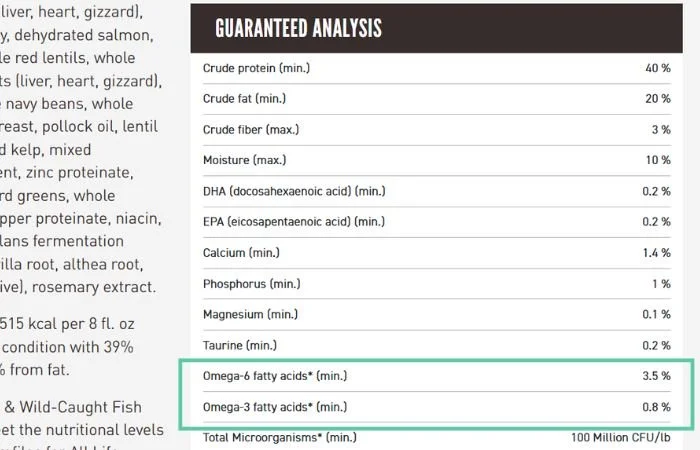
Omega-6 and omega-3 content under the Guaranteed Analysis Panel
The Takeaway
The omega-6 to omega-3 ratio is not just a number on a nutrition chart. It is a practical lever for managing inflammation in your pet's body. For pets living with chronic conditions, getting this balance right is a meaningful part of long-term nutritional management.
Understanding what your pet is eating, where the fats in their diet come from, and whether their current food supports or works against their health goals is exactly the kind of informed decision-making that makes a difference over time.
If you would like personalised guidance on fatty acid balance and your pet's specific condition, a one-on-one nutrition consultation can help you navigate these decisions with clarity and confidence.
---
This article is for educational purposes and does not constitute veterinary medical advice. Always consult your veterinarian before making significant changes to your pet's diet or supplementation.