Dehydration in Dogs and Cats — What to Watch For, and What to Do
Warning signs of dehydration in dogs and cats include dry or tacky gums, thick saliva, sunken eyes, lethargy, reduced urine output, and loss of skin elasticity. The standard skin-tent test is less reliable in senior pets (including both dogs and cats) because their skin naturally loses elasticity with age. Some older pets will start losing fat and muscle mass over their shoulders, which creates loose, hanging skin regardless of hydration status. So, don't rely on it alone in older or very thin dogs and cats. Do observe the pet’s gum moisture and overall behaviour too.
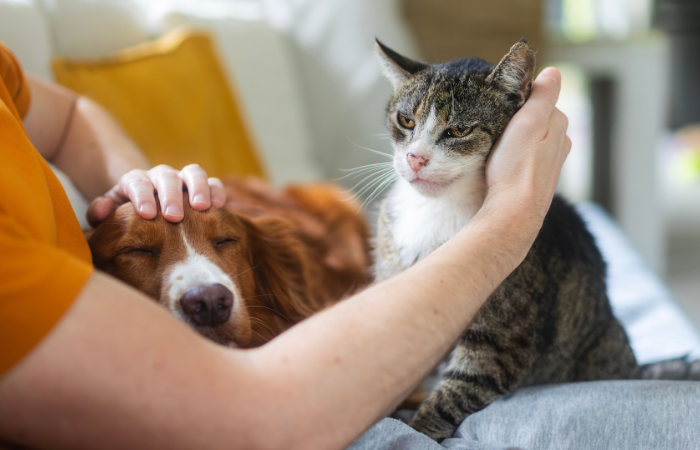
Owner with dog and cat on sofa, snuggling together
Recognizing dehydration early is what gives an owner time to act before it becomes an emergency. This is drawn directly from what's covered in pet first aid training, adapted specifically for the differences between dogs and cats. I spent 3 years as a pet first aid instructor and here’s what included in the training program.
Warning Signs of Dehydration in Dogs and Cats
Learn to recognize these signs. Signs common to both species:
— Dry or tacky gums, instead of moist and slick
— Thick, ropey saliva
— Sunken-looking eyes
— Lethargy or reduced interest in normal activity
— Reduced or darker urine output
— Loss of skin elasticity — gently lift the skin between the shoulder blades (skin-tent test). It should snap back quickly in a well-hydrated pet
Beware: Skin-Tent Test can Unrealiable in Some Pets
While the skin tent (or skin turgor) test is a popular method to check for dehydration, it is highly subjective and frequently unreliable in older dogs and cats, obese or very thin pets, and certain dog breeds with naturally loose or wrinkled skin (like Basset Hounds, Bloodhounds, Shar-Peis, or Bulldogs).
Age: As dogs and cats age, they lose collagen and elastin in their skin. A senior pet's skin will often remain tented for several seconds even if they are perfectly hydrated, leading to a false-positive for dehydration.
Obese Pets: Excess fat right beneath the skin changes how the tissue behaves. In some overweight pets, the heavy fat layer can cause the skin to slide back down slowly, mimicking dehydration.
Emaciated or Very Thin Pets: Dogs and cats that have lost significant weight or muscle mass have loose, redundant skin. This lack of structural underlying fat and muscle mass can cause the skin to stay tented regardless of their hydration status.
It is also important to note that cats also tend to mask illness more than dogs do. A dehydrated cat is more likely to withdraw, hide, and reduce grooming, rather than show the more obvious distress signals a dog might display.
First Aid Steps for a Dehydrated Pet
— Offer small amounts of water frequently, rather than a large volume at once as drinking too much too quickly can trigger vomiting
— Move the pet to a cool, shaded, well-ventilated area if heat or exertion is a contributing factor
— Ice chips can be an option for a pet reluctant to drink water directly
— Do not attempt to force water into a pet who is weak, unresponsive, or struggling to swallow
— Treat mild dehydration cautiously at home, but contact a veterinarian promptly for lethargy, vomiting, diarrhoea, or a skin-tent test that doesn't bounce back quickly — these warrant immediate veterinary attention!
Frequently Asked Questions
Q: What are the first signs of dehydration in a dog or cat?
A: Dry or tacky gums, thick saliva, and mild lethargy are typically the earliest noticeable signs, often before more obvious symptoms like sunken eyes appear.
Q: Is the skin-tent test reliable for checking dehydration?
A: It's a useful indicator but less reliable in senior pets, overweight or emancipated dogs and cats since their skin naturally loses elasticity independent of hydration status. Gum moisture and behaviour are more reliable in these cases.
Q: What should I do if I think my pet is dehydrated?
A: Offer small amounts of water frequently, move them to a cool area if heat is a factor, and contact a veterinarian promptly if you notice lethargy, vomiting, diarrhoea, or a skin-tent test that doesn't return to place quickly.
Q: Can I give my dehydrated pet water all at once to help them recover faster?
A: No! Offering a large volume of water at once can cause vomiting in a dehydrated pet. Small, frequent amounts are safer and more effective.
Written by Katherine Khoo, certified pet nutritionist (Small Animal Natural Nutrition, CIVT Australia) and founder of Wisetroop, with 12+ years of nutrition experience across both human and animal health. This article is for educational purposes and does not constitute veterinary medical advice. Always consult your veterinarian before making significant changes to your pet's diet or supplementation.