Spirulina for Dogs and Cats: What This Blue-Green Algae Actually Does
Starting this month, we're adding a new monthly feature: a deep dive into one specific food or nutraceutical. First up: Spirulina, one of the more heavily researched ingredients in both human and pet nutrition.
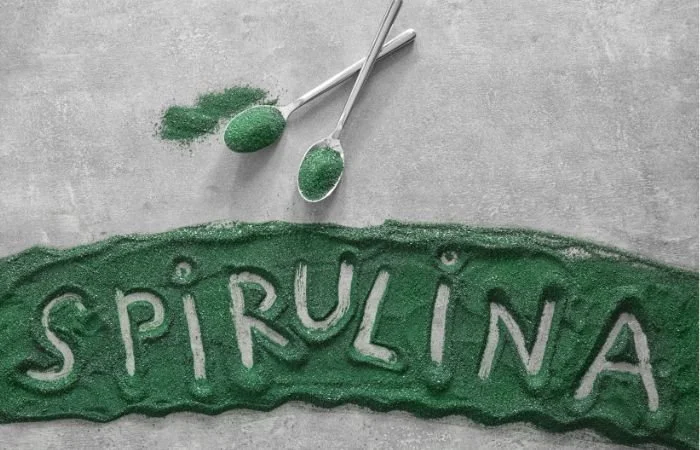
Spirulina powder
What is Spirulina?
Spirulina (genus Arthrospira) is a multicellular, filamentous cyanobacterium, also commonly called blue-green algae, though it's technically a bacterium, not a true algae. It grows naturally in alkaline lakes and has been consumed for centuries by communities living near them. Its appeal to the health food industry, and to pet nutrition, comes down to an unusually dense nutrient profile combined with the fact that it's straightforward to grow, harvest, and process at scale.
Nutritional composition
Spirulina's macronutrient profile is genuinely unusual for a single food source:
Protein: 55–70% of dry weight — a remarkably high concentration for a whole food
Polysaccharides: 15–25%
Total lipid: 5–6%
Nucleic acids: 6–13%
Minerals: 2.2–4.8%
Within that lipid fraction, polyunsaturated fatty acids (PUFAs) make up 1.5–2.0% of total lipid content, and the fatty acid profile itself is notable. Spirulina is particularly rich in gamma-linoleic acid (GLA), making up 30–35% of its total PUFA (Polyunsaturated Fatty Acids) content, and also supplies stearidonic acid (SDA), EPA, DHA, and AA. That's a broad fatty acid spread from a single algae source, spanning both the omega-6 and omega-3 families.
Beyond fat and protein, Spirulina contains a wide spread of B vitamins (B1, B2, B3, B6, B9, B12), minerals (calcium, chromium, copper, iron, manganese, magnesium, phosphorus, selenium, sodium, zinc), photosynthetic pigments, and insulin-like proteins.
What Spirulina actually does: The research on its mechanisms
Spirulina has been studied for a broad range of biological actions, including:
Immune modulation
Selective COX-2 inhibition (relevant to its anti-inflammatory reputation)
Hypolipidemic effects (lowering blood lipids)
Hepatoprotective effects
Antiviral and antibacterial activity
Anticancer activity
Neuroprotective effects
Renoprotective effects
Cardiovascular protective effects
This breadth is part of what makes Spirulina such a frequently discussed supplement but it's worth being precise about which of these effects have direct veterinary research behind them versus broader biological plausibility.
The malnutrition and anemia connection
Because Spirulina is such a concentrated protein and micronutrient source, dietary supplementation has been studied for its role in addressing malnutrition, and specifically in alleviating anemia associated with pregnancy, lactation, aging, or nosotoxicosis (toxin-related illness).
Dog-specific research: canine demodicosis
One of the more interesting pieces of veterinary-specific research involves canine demodicosis — a skin condition caused by an overpopulation of Demodex mites, often linked to an underlying immune dysfunction. Berraza et al. (2013) studied Spirulina as an adjunct to standard amitraz treatment in juvenile dogs with generalized demodicosis, and found it supported earlier recovery without adverse effects related to its chemical composition suggesting a genuine role as adjuvant (supportive, not primary) therapy for this specific condition. Given demodicosis is often linked to immune status, this lines up with Spirulina's broader immune-modulating research profile.
Cat-specific research: cholesterol and immune function
Two pieces of feline-specific research are worth knowing:
Cholesterol management. Shamsudin et al. (2018) studied cats fed a high-cholesterol diet, administering concentrated Spirulina platensis by oral gavage at doses of 0.5 and 1.0 g/kg body weight per day. Serum cholesterol levels were lowered as a result, supporting Spirulina's hypolipidemic reputation with direct feline data, rather than extrapolation from other species.
Immune/macrophage function. Qureshi and Ali (1996) found that a water-soluble extract from Spirulina platensis enhanced phagocytic function in feline bronchoalveolar lavage macrophages; meaning the immune cells responsible for engulfing and clearing pathogens in the lungs worked more effectively with Spirulina exposure. This is a more mechanistic, cellular-level finding rather than a whole-animal clinical outcome, but it supports the broader immune-modulating claims with feline-specific data.
A broader cancer research note
Outside of companion animal-specific research, Spirulina's C-phycocyanin compound (the pigment responsible for its blue-green colour) has been studied in combination with the anti-inflammatory drug piroxicam in a rat model of colon carcinogenesis. The combination reduced tumor number and size, increased tumor inhibition rate compared to piroxicam alone, and reduced drug toxicity and side effects. Worth noting as an example of Spirulina's studied anticancer mechanisms, though this is rodent research rather than companion animal-specific.
Spirulina’s safety profile
Spirulina is generally considered very safe based on the available research, with no significant adverse effects reported at the doses used in the studies above. The main safety consideration isn't Spirulina itself but it's product quality.
Product quality is the real variable to watch. Because Spirulina is grown in open water systems, there's substantial variation in quality between products, and a genuine risk of contamination with heavy metals and other environmental pollutants, depending on the water source and processing standards used. This makes sourcing from a reputable manufacturer with actual quality control testing more important than with many other supplements. The biological safety profile of Spirulina itself is good, but that's only true if the product you're using is clean.
How much to give your dogs and cats
Published dosing guidance:
Cats: 0.5–1 g/kg body weight daily, though the higher end of this range may affect palatability. In practical terms, roughly 1/16 to 1/8 teaspoon daily is generally well tolerated.
Dogs: roughly 1/4 to 1/2 teaspoon per 10 kg body weight daily.
As with any supplement, starting at the lower end and monitoring tolerance, particularly palatability and stool consistency. Starting low is a sensible approach before working up to a full dose. And given the quality variation noted above, sourcing matters as much as the dose itself.
Frequently Asked Questions
Q: Is Spirulina the same as chlorella?
A: No, they are not the same. They're often confused, but chlorella is a true green algae, while Spirulina is a cyanobacterium. They have overlapping but distinct nutrient profiles and shouldn't be treated as interchangeable.
Q: Can Spirulina replace a balanced diet?
A: No, despite its nutrient density. Spirulina can be used as a supplement, but it is not a substitute for a complete and balanced dog or cat diet. Its research support is as an adjunct or targeted addition, not a foundational food source.
Q: Is Spirulina safe for long-term daily use?
A: The available research generally supports this at appropriate doses from a quality-tested product, but as with any long-term supplementation, periodic veterinary review is sensible, particularly for pets with existing health conditions.
Q: Where does the risk of heavy metal contamination come from?
A: Spirulina is grown in open water, so contamination risk depends heavily on the water source and the grower's testing standard. This is a sourcing and manufacturing quality issue rather than an inherent property of Spirulina itself.
Written by Katherine Khoo, certified pet nutritionist (Small Animal Natural Nutrition, CIVT Australia) and founder of Wisetroop, with 12+ years of nutrition experience across both human and animal health. This article is for educational purposes and does not constitute veterinary medical advice. Always consult your veterinarian before making significant changes to your pet's diet or supplementation.